
مانع التسرب السيلكوني المناسب؟ الاسيتوكسي أم متعادل الجفاف؟
استخدامات موانع التسرب ومواد ملء الفواصل السيلكونية في صناعة البناء
تعتبر مواد موانع التسرب السيليكونية من المنتجات متعددة الاستخدامات ولها العديد من الاستخدامات في صناعة البناء والتشييد، الأول هو سد الفواصل العام والذي يهدف بشكل أساسي إلى ملء الفجوات بين عناصر البناء ومنع مرور الهواء والماء وما إلى ذلك، وتعزيز المظهر البصري للبناء، والسماح بحركة محدودة للأسطح الخرسانية واستيعاب هذه الحركة في الفواصل.
والثاني كمانع تسرب الزجاج الهيكلي (SSG) حيث يوفر مانع التسرب الدعم الهيكلي وربط الزجاج والمكونات الأخرى بالنافذة أو الحائط الساتر أو أي نظام تأطير آخر بالإضافة إلى العمل لملء الفراغات وكحاجز ضد مرور الهواء والماء عبر المبنى .
سنركز في هذا المقال على أول استخدام لموانع التسرب ومواد ملء الفواصل السيليكونية وشرح الاختلافات بين اشهر نوعين لموانع التسرب السيلكونية: متعادل الجفاف(ألكوكسي) وأسيتوكسي الجفاف
خصائص موانع التسرب ومواد ملء الفواصل السيلكونية
تتميز موانع التسرب ومواد ملء الفواصل السيليكونية مقارنة بمواد ملء الفواصل الأخرى بمزايا رائعة، بما في ذلك المرونة الاستثنائية وسعة الحركة، المقاومة العالية للأشعة فوق البنفسجية والطقس، الالتصاق الممتاز على الأسطح غير المسامية، تحمل نطاق واسع من درجات الحرارة، المقاومة الكيميائية الجيدة، ومقاومة العفن ، بالاضافة الى التوافر بلون شفاف.
من ناحية أخرى، فهي تعاني من محددات مثل كونها غير قابلة للطلاء، وعرضة لالتقاط الأوساخ، ومقاومة محدودة لانتشار التمزق.
ما هي أنواع موانع التسرب ومواد ملء الفواصل السيلكونية؟
ثنائي ميثيل بولي سيلوكسان (Polydimethylsiloxane) هو المادة الخام الأساسية لموانع التسرب ومواد ملء الفواصل السيلكونية ، وعامل الارتباط المتقاطع (cross linker) عبارة عن مركب سيلان (silane) متعدد الوظائف، والذي يمكن أن يتفاعل كيميائيًا مع المادة الخام لتغييره من جزيء على شكل سلسلة إلى نظام على شكل متشابك.
يمكن استخدام عوامل ارتباط متقاطعة مختلفة وإطلاق مواد مختلفة أثناء الجفاف. وفقًا لأنواع الجزيئات التي يتم إطلاقها، يمكن تقسيم موانع التسرب ومواد ملء الفواصل المصنوعة من السيليكون بشكل أساسي إلى نوع ديسيتات (حمض الأسيتيك)، ونوع ديكيتوكسيم (أوكسيم)، ونوع ينتج عنه الكحول (ألكوكسي).
بولي داي ميثيل سيليكوان + سايلان كروس لينكر (أسيتوكسي، ألكوكسي، أوكسيم) = سيليكون + نواتج اخرى(أسيتوكسي: حمض الأسيتيك، ألكوكسي: إيثانول، أوكسيمMEK : )
تجف موانع التسرب السيليكونية من مكون واحد مع تعرضها لرطوبة الهواء، وتنقسم إلى فئات وفقًا للمواد التي يتم إطلاقها في عملية المجفاف، وأكثر مانعات التسرب السيليكونية شيوعًا هي متعادلة الجفاف-ألكوكسي(Neutral) والأسيتوكسي (Acetoxy).
إذن ما الفرق بين هذين النوعين؟
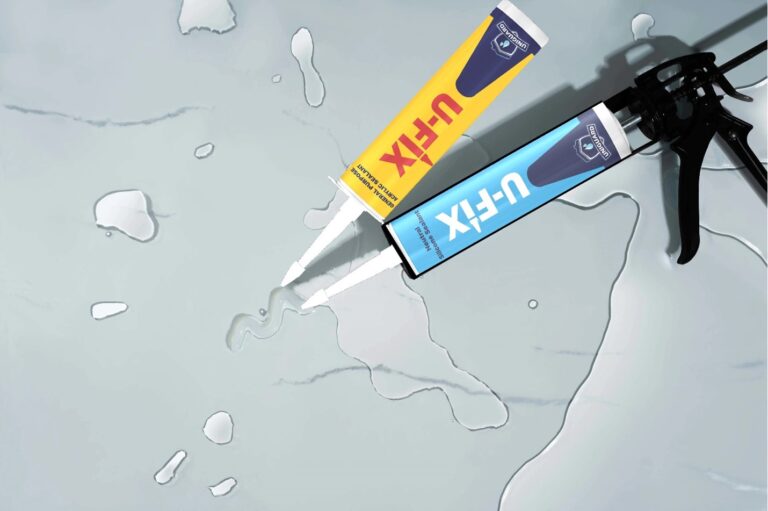
موانع التسرب ومواد ملء الفواصل السيلكونية من نوع الأسيتوكسي مثل يو فيكس سيلكون A تقوم بإطلاق حمض الأسيتيك الذي يشبه رائحة الخل القوية أثناء عملية الجفاف.
يتميز نوع الأسيتوكسي من موانع التسرب السيلكونية بميزة الجفاف بشكل أسرع بكثير من النوع متعادل الجفاف-ألكوكسي. وعادةً ما تصبح بعض منتجات موانع التسرب السيليكون من نوع الأسيتوكسي جافة جفافا سطحيا عند اللمس خلال دقائق، ولكن من المهم ملاحظة أنه لن يتم جفافه بالكامل لمدة تصل إلى 24 ساعة.
تتلاءم موانع التسرب السيلكونية من نوع الأسيتوكسي بشكل جيد مع ملء الفواصل في التطبيقات الصحية، حيث المواد الأكثر استخدامًا هي بلاط السيراميك والزجاج والألمنيوم المؤكسد، كما أنها فعالة من حيث التكلفة مقارنة بموانع تسرب السيلكون من النوع متعادل الجفاف-ألكوكسي.
تعتبر موانع التسرب السيلكونية من نوع الأسيتوكسي أكثر شفافية من موانع تسرب السيلكون من النوع متعادل الجفاف-ألكوكسي عند استخدامها في اغلاق الوصلات التي تربط الزجاج بالزجاج ،مثل الجدران الزجاجية.
كما تعتبر موانع التسرب السيلكونية من نوع الأسيتوكسي اقتصادية اكثر من موانع تسرب السيلكون من النوع متعادل الجفاف-ألكوكسي.
وان الرائحة الناتجة من استخدام موانع التسرب السيلكونية من نوع الأسيتوكسي ليست لطيفة ونفّاذة تشبه رائحة الخل.
لا تتوافق موانع التسرب السيلكونية من نوع الأسيتوكسي مع المعادن الحساسة للتآكل/المعادن غير المغطاة والسبائك مثل الرصاص والزنك والنحاس والمعادن الحديدية لأن حمض الأسيتيك الذي ينتج أثناء عملية الجفاف قد يسبب التآكل. ويجب استخدام موانع تسرب السيلكون من النوع متعادل الجفاف-ألكوكسي بدلاً منها.
ايضا، لا ينصح باستخدام موانع التسرب السيلكونية من نوع الأسيتوكسي مع الأسطح القلوية مثل المونة والخرسانة، بالاضافة الى الركائز المسامية مثل المنتجات ذات الأساس الأسمنتي (كالخرسانة والقصارة والبلوك وغيرها) والأحجار والرخام والجرانيت وغيرها،. حيث أن التركيز العالي لحمض الأسيتيك المنبعث منه يسبب تآكلًا شديدًا، ويمكن أن يسبب تغير اللون عند استخدامه على الحجر الطبيعي.
كما انه لا ينصح بتطبيق نوع الأسيتوكسي من موانع التسرب السيلكونية على الأسطح البيتومينية.
موانع التسرب ومواد ملء الفواصل السيلكونية متعادلة الجفاف-(ألكوكسي) مثل يو فيكس سيلكون N تطلق مركبات لها رائحة حلوة أو عديمة الرائحة بشكل أساسي أثناء عملية الجفاف.
مثالي لسد الفواصل وملء الفراغات في المواد التي قد تتأثر بنوع الأسيتوكسي (مثل الخرسانة، الحجارة، النحاس ،المرايا والمواد البيتومينية وأي مساحة قريبة من الأجهزة الإلكترونية الحساسة.)
تعتبر التوصيلات بين الأسطح المعدنية وعتبات النوافذ وأجهزة التهوية وفواصل الواجهات الخرسانية والبناء مجرد أمثلة قليلة حيث يعمل مانع التسرب السيليكوني من النوع متعادل الجفاف بشكل مثالي بينما نوع الأسيتوكسي لا يعمل.
كما أنه ممتاز للتطبيقات الخارجية لأنه أكثر مقاومة للعوامل الجوية من نوع الأسيتوكسي الجفاف.
Seal the Right Way: Acetoxy vs. Neutral Siliconee sealants?
Silicone Sealants Uses In Construction
Silicone sealants are versatile prodcuts have many uses in construction industry, the first is general joint sealing which is mainly to seal gaps between construction elements and prevent passage of air, water, etc., Enhance the visual appearance of the construction, and permitting limited movement of the substrates & accommodate theses movement in joints.
The second is Structural sealant glazing (SSG) where a sealant provides structural support and attachment of glazing and other components to a window, curtain wall, or other framing system in addition to function as a barrier against the passage of air and water through a building envelope.
We will focus today on the first use of silicone sealants and explain the differences between neutral & acetoxy sealants
Silicone sealants Properties
Silicone sealants compared with other joint sealants materials boast remarkable advantages, including exceptional elasticity and joint movement capabilities, high UV and weather resistance, excellent adhesion on non-porous substrates, heat stability across a wide temperature range, good chemical resistance, mould resistance and availability in a transparent color.
On the other hand, they have limitations such as being non-paintable, prone to dirt pickup, and limited tear propagation resistance.
What are Silicone Sealant Types?
Polydimethylsiloxane is the basic raw material of siliconee sealant, The cross-linking agent is a multifunctional silane compound, which can chemically react with Polydimethylsiloxane to change it from a chain molecule into a network cross-linked system.
Various crosslinking agents can be used and release various small molecules during curing. According to the types of small molecules released, architectural siliconee sealants can be mainly divided into deacetate type (acetic acid), deketoxime type(oxime), dealcoholization type(alkoxy).
Polysilicoane + cross linker (acetoxy, alkoxy, oxime) = siliconee +by products (acetoxy: acetic acid, alkoxy: Ethanol, oxime: MEK)
One component Silicone sealants cure due to the presence of air humidity and are divided into categories according to the chemicals that are released in the curing process, and most popular silicone sealants are neutral(alkoxy) and acetoxy.
So, what is the difference between these two types?
Acetoxy siliconees such as U-fix Silicone A release acetic acid, which is similar to strong vinegar smell during the curing process.
Acetoxy sealants have the advantage of drying much faster than neutral cure siliconee. And some acetoxy siliconee usually becomes tack-free within minutes, although it is important to note that it will not be fully cured for up to 24 hours.
Acetoxy siliconees fit well in sealing sanitary rooms, where the most commonly used materials are ceramic tiles, glass, and anodized aluminum, and they even provide cost-effective advantages compared to neutral silicone sealants.
Acetoxy siliconees are considerably clearer than neutral siliconees sealing glass-to-glass connections, such as glass partition walls.
acetoxy siliconee sealants are more affordable than natural cure caulking materials.
aforementioned odor caused by acetoxy siliconee is not exactly pleasant.
Neutral Silicone Sealants Such as U-Fix silicone N release compounds that have a specific sweet aroma or are mainly odourless during the curing process.
Perfect for caulking materials that would otherwise be affected by acetoxy sealant (I.e. concrete, stones, brass, copper, mirrors, bituminous materials and any space that is close to sensitive electronics.)
Connections between metal surfaces, window sills, ventilation appliances, concrete façade joints, and masonry are just a few examples where neutral siliconee works properly but acetoxy siliconee does not.
It is also excellent for exterior applications because it is more weather resistance than its acetoxy alternative.